![Eikona]()
“The Nerd Reich”: Author Gil Durán on Big Tech Fascism, Peter Thiel, JD Vance & the War on Democracy
Story August 17, 2026
A new book by longtime Bay Area journalist Gil Durán investigates “tech fascism” and its mounting influence on U.S. politics. The Nerd Reich: Silicon Valley Fascism and the War on Democracy follows the rise of Vice President JD Vance, the former venture capitalist whose “outsider” campaign for Senate was bankrolled by the billionaire co-founder of PayPal and Palantir, Peter Thiel. Durán traces the ideological lineage of the current Trump administration back from Vance to Thiel and the far-right-wing monarchist Curtis Yarvin, whose “right-libertarian” political theory has long made the rounds among Silicon Valley elite. “These guys were never libertarians,” says Durán. “Now that they are the government, we see their true face: They’re fascists, and they’re authoritarians.”
AMY GOODMAN: This is Democracy Now!, democracynow.org, The War and Peace Report. I’m Amy Goodman, with Anjali Kamat.
ANJALI KAMAT: The Nerd Reich: Silicon Valley Fascism and the War on Democracy. That’s the name of a new book by our next guest, the journalist Gil Durán. The book looks at how tech billionaires, including Peter Thiel and Elon Musk, are pushing what Durán calls “tech fascism.”
Gil Durán also documents how Thiel had played a pivotal role in JD Vance’s rise to power. Durán writes, quote, “Vance is almost entirely a creation of Thiel who bankrolled his brief stint as a Silicon Valley venture capitalist and United States senator. With Vance at Trump’s side — Silicon Valley had one of their own in the White House — a tech venture capitalist one heartbeat away from the presidency.”
AMY GOODMAN: Gil Durán joins us here in New York. He’s the former opinion editor of The Sacramento Bee and editorial page editor at the San Francisco Examiner. He now publishes two newsletters: The Nerd Reich and FrameLab.
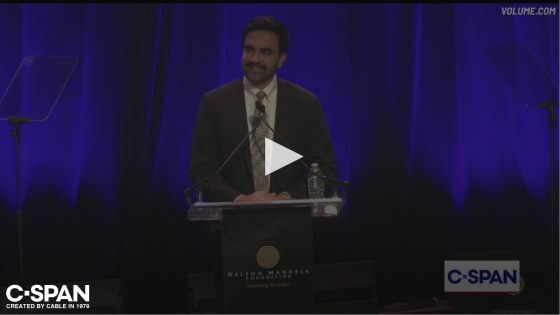
Welcome to Democracy Now! So, let’s start with the title, The Nerd Reich: Silicon Valley Fascism and the War on Democracy. Why’d you choose it?
GIL DURÁN: Well, in 2024, I wrote a series for The New Republic about the extremist ideological beliefs coming out of Silicon Valley. And after I’d written a story that went really viral and got me under attack by one of these guys, someone reached out to me from the crypto world and said, “You know, we’ve been calling these guys 'the Nerd Reich' for years.” And that blew my mind. And I saw that no one was really using that title, and so I rebranded my newsletter, which had some boring other name, as The Nerd Reich, and that became the main message of it. But I thought it was amazing that from within their own community, this was a label that was applied to them. People understood it was fascist and was echoing Nazism in nature.


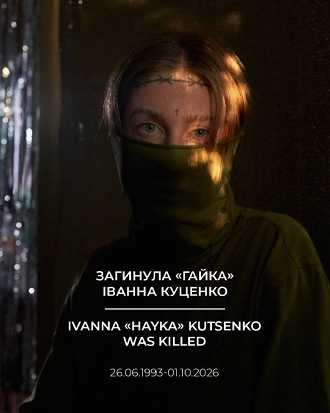 Ivanka was killed in action under Russian bombardment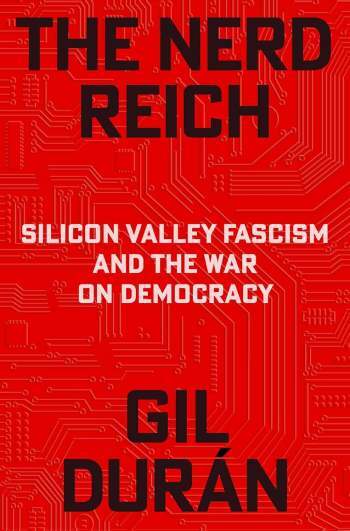
 The war against Iran was supposed to simplify the problem: military pressure, Tehran’s retreat, negotiations from a position of weakness, and perhaps even regime change. But war rarely obeys the fantasies of those who launch it. Instead of simplifying the Iran question, it has changed it.


 The United States has grown wary of long term occupations. Abandoning the pretence of exporting democracy, the Trump administration has chosen to force existing powers to comply with its rule.