Plusieurs générations de militants célèbrent la mémoire d’Alain Krivine
Son parti, plusieurs figures de gauche ainsi que des anonymes ont rendu hommage au dirigeant historique de la Ligue communiste révolutionnaire (LCR), décédé le 12 mars à 80 ans, lors d’une cérémonie au Père-Lachaise à Paris.
Que sont des obsèques militantes si ce n’est un pied de nez à la mort ? Dans le cas d’Alain Krivine, figure historique de la Ligue communiste révolutionnaire (LCR), décédé le 12 mars 2022, la poursuite acharnée de l’idéal politique s’affiche sur la grande banderole rouge à l’avant du cortège qui accompagne l’homme au cimetière parisien du Père-Lachaise : « Ce n’est qu’un début, continuons le combat ».
Anastasie, retraitée anonyme, non encartée, est venue marcher avec plusieurs centaines de personnes entre la place de la Nation et le Père-Lachaise lundi 21 mars 2022, pour célébrer « ce symbole » et « cette mémoire, surtout par les temps qui courent, si sombres ». Pour elle, Krivine, ce sont les « gueux qui en remontrent », Mai-68, le combat contre la guerre du Vietnam et celle d’Algérie.
De jeunes militantes et militants, en haut de la rue des Pyrénées, reprennent avec ferveur la filiation, entonnant un air connu des manifestations françaises : « Première, deuxième, troisième génération, nous sommes toutes et tous des camarades d’Alain ! »
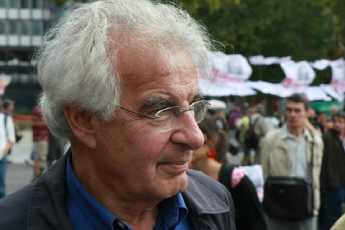
![2022 03 22 01 Alain Krivine]() Obsèques d'Alain Krivine, à Paris, le 21 mars 2022. © Alain JOCARD / AFP
Obsèques d'Alain Krivine, à Paris, le 21 mars 2022. © Alain JOCARD / AFP


 Les pornographes de l’émotion s’en donnent à cœur joie. En tête de gondole, les magazines « people » et toute la cohorte des médias qui prétendent encore faire œuvre d’information auprès du grand public. Logique. Vendre du papier et faire du chiffre en termes d’audience, leurs motivations se résument à cette trivialité.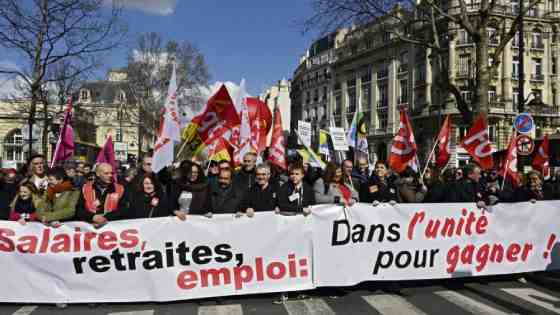
 À force d’abstraction, certain·es inventent une géopolitique dénuée d’êtres humains, et semblent, en particulier, oublier les Ukrainien·nes bombardé·es, massacré·es, déporté·es, réfugié·es et aussi résistant·es… C’est pourtant le présent et l’avenir des populations ukrainiennes qui devraient être au centre des politiques posées par le crime d’agression.
 On April 10 the World Bank updated its GDP prognosis for Ukraine to state that the Russian invasion was to shrink Ukraine’s economy by 45% in 2022 alone.[1] But that is a very optimistic prognosis. As by March 29th, the country’s direct one-time losses due to the invasion already exceed $1 trillion. Even prior to the invasions Ukraine already was one of the poorest and most indebted countries in Europe. Current budgetary expenditure on arms, humanitarian needs, and medical needs of the wounded have grown exponentially. That is why the IMF has already


 Abstract: Written in 1989, this article tells the true but unknown and dramatic story of Bolsheviks faced during the civil war with an unexpected national revolution of the oppressed Ukrainian people, the conflict-ridden relationships between Russian and Ukrainian communists and the great dilemma of what should be Ukraine: a part of the Soviet but, as in the imperial past, “one and indivisible” Russia or an independent Soviet state?
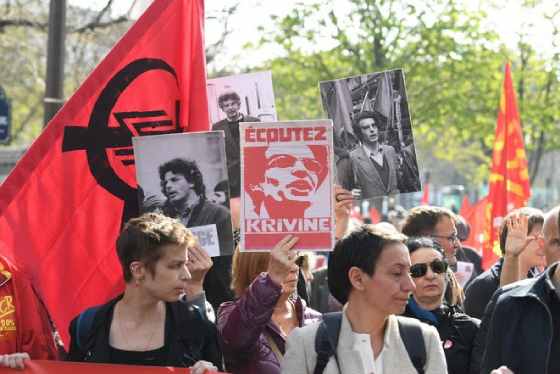 Obsèques d'Alain Krivine, à Paris, le 21 mars 2022. © Alain JOCARD / AFP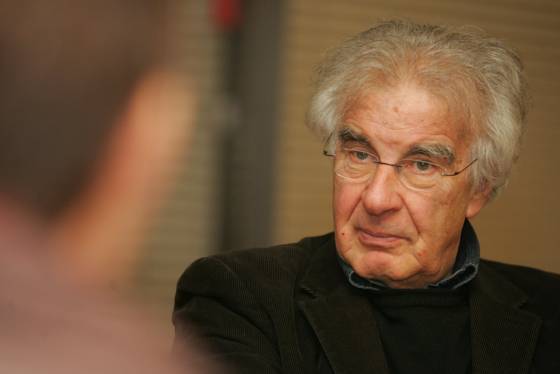
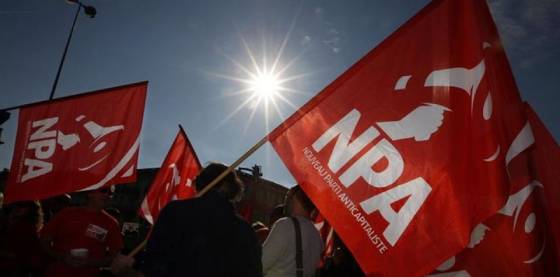
 Notre camarade Alain Krivine nous a quittés aujourd’hui, à l’âge de 80 ans. Nous, camarades du NPA, nous associons à la douleur de sa famille, de ses proches, et de toutes celles et tous ceux qui se sont reconnus dans les combats qu’il a menés.