Against the banning of the consultation of 9 November:
THE PEOPLE OF CATALONIA HAVE THE RIGHT TO VOTE AND TO DECIDE THEIR FUTURE
 The Catalan people have proven to the world that they are ready to take the reins of their own destiny.
Since the 2010 ruling by the Spanish State Constitutional Court cutting down the Catalan Statute of Autonomy – after it had been approved by the Catalan and Spanish parliaments and endorsed by a majority vote of the Catalan people in a referendum in 2006 – there have been street demonstrations and a range of other actions in favour of sovereignty have united most people behind the demand for the power to vote for an independent state. The most recent was the march in Barcelona on September 11, Catalonia's national day, attended by 1.8 million people.
 Après la guerre sanglante importée qui a divisé la classe ouvrière bosniaque, le nouveau pouvoir sous protectorat international a promis aux travailleurs le « paradis suédois », mais il les a plongés dans l' « enfer grecque » : il n'y a plus de travail ni pour les vieux, ni pour les jeunes, il n'y a plus d'accès libre et gratuit aux soins médicaux, il n'y a plus d'école laïque et gratuite, il n'y a plus de droit de vote pour ceux à qui l'administration tarde à fournir la nouvelle carte d'identité... Pas plus que de poursuite des criminels de guerre et de soutien aux combattants et victimes de guerre.
 Alors que l’Espagne vit une crise humanitaire sans précédent, le mouvement social subit une répression constante d’un régime qui a peur du changement et protège ses intérêts. Le bipartisme qui s’alterne au pouvoir depuis la fin de la dictature est fort affaibli par une succession de luttes sociales victorieuses et l’irruption d’initiatives populaires qui mettent en pratique de nouvelles façons de faire de la politique. A n’en pas douter, l’Espagne entre dans une phase de mobilisation qui augure de possibles changements politiques importants.
 The Argentine parliament has just passed legislation for launching a debt audit commission. It will look into the debts contracted by the country since the military junta took over in 1976. The Commission, which is yet to take off, is supposed to submit its report within 180 days. The audit can genuinely serve the interest of the people. Thus, CADTM urges the Argentine government to follow the example of Ecuador which set up a commission in 2007 for an audit of the debt incurred between 1976 and 2006.
 ISIS launched a major multi-front military campaign against the Kurdish region of Kobanê in northern Syria. This is the third ISIS onslaught on Kobanê since March 2014. As the ISIS was unsuccessful on the two previous occasions, they are attacking with larger forces and want to take Kobanê.
 The United States is once more experiencing the reality of this old Jewish saying. Supporting the most fundamentalist Muslims in Afghanistan in the hope of putting and end to Soviet influence, finding itself a few years later confronted with a total war against al-Qaida and its cloudy international, and whose result will be far from being a victory. In the background is the, always mistaken, idea that the enemies of my enemies are my friends. Back in the 1930s, the "democratic" countries thought that Hitler could be an ally against the communist danger. We know what happened then...
 Le « prix de la Banque de Suède en sciences économiques en l'honneur d'Alfred Nobel », improprement appelé prix Nobel d'économie, vient d'être attribué au français Jean Tirole. Alors qu'un déluge de commentaires élogieux en forme de « cocoricos » se propage dans les médias, Attac déplore ce choix qui s'inscrit dans la lignée des prix attribués à Hayek, Friedman et autres économistes néolibéraux en grande partie responsables de la crise actuelle.
 According to the latest predictions of the U.S. Centers for Disease Control and Prevention (CDC), if the Ebola pandemic continues to progress at the current rhythm, it could affect 1.4 million people in Liberia and Sierra Leone between now and January 2015, leading to the deaths of 700,000 in a year, and thus making Ebola the third leading cause of death from infectious diseases in Africa, after AIDS and respiratory diseases. The two countries most seriously affected could suffer the loss of 10 percent of their populations in a year, if one takes into account the impact of such a catastrophe on food production and the overall health of the populations involved. Our understanding of the causes then is urgent in order to avoid the worst and to prevent similar tragedies in other regions of the global South.
 The Dutch Socialist Party went from fringe force to national contender. But it lost its soul along the way.
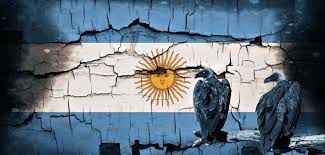 Argentina has legislated to create a commission to investigate the origin of the country’s debt, dating back to the military dictatorship of 1976 to 1983. The law states that once the commission has been established, it will report within 180 days. Campaigners in Argentina have been calling for a public audit into the debt, to discover if any loans were odious or illegitimate, and hence should not be paid. It is not yet clear when the commission will be established.
 In the last few days the Occupy Central movement has continued to grow phenomenally. Following a very tense day and night on Sunday as police continually tried to disperse the protesters with force, firing numerous rounds of teargas, the large numbers and protesters determination to keep the roads meant that on Monday morning the streets were still occupied and the riot police were withdrawn from attacking the protesters. The atmosphere in Central by Monday night was a complete contrast to the night before as calm ensued and thousands more arrived to participate in the protests, appalled by the government's response and use of force the day before, to occupy large sections of the roads and calls for the Chief Executive Leung Chun-ying to step down were repeatedly shouted by the crowd. Thousands of protesters again stayed on the streets overnight on Tuesday, despite at times being battered by heavy rain, and yesterday was then National Day -the original planned start date of Occupy Central. However those initial plans of the OC leadership trio have long become worthless, paling in comparison to the dynamic the movement has taken on and the actions of ordinary people in their struggle for democracy. With a two day public holiday and many not having to go to work, even larger numbers have come out to take part. Protesters have gathered in their thousands over the last few days not just in Central District, but in Mong Kok and Causeway Bay, and yesterday also spread to Tsim Tsa Tsui.
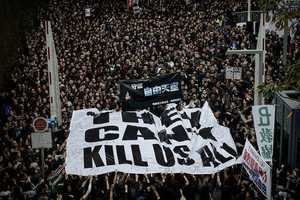 Monday 29th September 2014/Occupy Central Day 3 - Occupy central continues to grow by leaps and bounds.
 Con una rapidez sin precedentes, el Tribunal Constitucional ha admitido a trámite los recursos presentados por el gobierno contra la ley de consultas del Parlament catalán y el decreto, firmado por el President de la Generalitat, de convocatoria de una consulta no vinculante el próximo 9 de noviembre. Pretende, además, paralizar no sólo la consulta sino también “las restantes actuaciones de preparación para la convocatoria de dicha consulta o vinculadas a ella”. De esta forma, una suspensión cautelar “exprés” sitúa en la ilegalidad a una mayoría social y política en Cataluña.