


Ce passé qui nous hante et façonne notre présent !
Adresses – internationalisme et démocr@tie n°12
Par Yorgos Mitralias
Il est manifeste que, par les temps qui courent, le passé revient en force pour hanter et même pour façonner de plus en plus notre présent ! C’est comme si les démons d’un passé prétendument exorcisés à jamais revenaient et, pire, occupaient de nouveau le devant de la scène politique. Prenez par exemple la seconde présidence de Trump et son trumpisme triomphant qui présente plus que des similitudes avec la peste brune de l’entre-deux-guerres. Évidemment, Naomi Klein et Astra Taylor ont tout à fait raison quand elles affirment que « nous devons reconnaître la réalité : nous ne sommes pas confrontés à des adversaires que nous avons déjà vus [1] ». Oui, sans doute, car cette seconde présidence de Trump semble inédite et n’a aucun précèdent non seulement parce qu’elle est dirigée et soutenue par des milliardaires mais aussi parce que tous ces ultra-riches qui la composent « ne se contentent pas de profiter des catastrophes, dans le style du capitalisme du désastre, mais les provoquent et les planifient simultanément ».
 Marxist scholar Michael Löwy, responding to Samuel Farber’s “In Defense of Progress” from the new issue of Jacobin, defends philosopher Walter Benjamin and argues that “progress,” as defined under capitalism, has come to threaten humanity’s very survival.

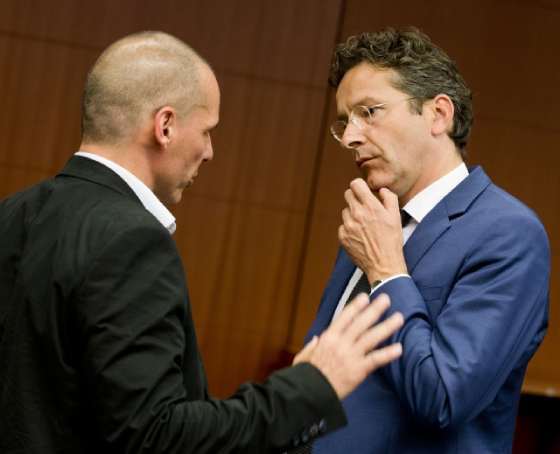

 25 January 2015, at a time when Greece had been suffering since 2010 under the burden of a severe austerity regime forced on the country by its creditors and by the social-democrat (Pasok) and conservative (New Democracy) parties who have taken turns exercising power in the country, Syriza (an acronym whose Greek meaning is “coalition of the radical Left”) won the legislative elections in Greece, with 149 deputies out of a total 300. Lacking an absolute majority in the Hellenic Parliament, Syriza formed a coalition government with ANEL (a small “souverainist” right-wing organization which announced that like Syriza, its priority was to put an end to the austerity policies). Syriza’s leader, Alexis Tsipras, became prime minister and appointed Yanis Varoufakis, a left-leaning economist close to Syriza, his finance minister.
 And what if U.S. President Donald Trump suggested setting up death camps for the inhabitants of the Gaza Strip? What would happen then? Israel would respond exactly as it did to his transfer ideas, with ecstasy on the right and indifference in the centrist camp.
 There are two conspicuous myths about the Gaza ceasefire that went into effect last Sunday: that it was due to Trump’s pressure on Netanyahu and that it was a victory achieved by Hamas.
 I am both Ukrainian and Jordanian of Palestinian origin. My mom is from Ukraine and my dad is a Palestinian-Jordanian. And there are a lot of people like me that come from this particular mix of heritage because many people studied in the former USSR. This is how my parents met. So I was born and raised in Ukraine, and then we moved to Jordan in 2003: I remember this date very well because it was the year when there was war in Iraq. So basically, both countries are my homeland. But all my childhood memories and growing up are related to Ukraine - it's my home.
  This paper looks not at workers’ struggles, which had their ups and downs over the last two hundred years, but specifically at the revolutionary socialist movement, which aims to eliminate capitalism. While there have been contributions to the vision of a classless, stateless society by utopian socialists and anarchists, the paper concentrates on Karl Marx and Frederick Engels and their legacy. It identifies three bifurcation points in this particular revolutionary socialist tradition where a substantial part of the movement abandoned democracy, internationalism, or both, and argues that this has had a disastrous effect on the movement and needs to be reversed.
 Yair Weigler, an educator and CEO of an organization called "Teachers for Change," has just returned from a lengthy stint in the reserves.
 “We have the power to take an historic stand and defeat this war mongering Senator Harris…. To win this election [the Democrats] need this city [Dearborn], they need this state [Michigan]. We need to deny them those votes….” (cheers and applause.) So spoke “socialist” leader Kshama Sawant in a