

Why Pakistan says adieu to IMF program?
by Abdul Khaliq
 Existing $11.3 billion Stand By Agreement (SBA) is 8th program with IMF, going to be ended on a bitter note.
Having kept the IMF at arm’s length for over a year now is anything but good news.
The government of Pakistan has taken the latest decision to say ‘adieu’ to the International Monetary Fund (IMF) at least for the time being, after the existing $11.3 billion Stand By Arrangement (SBA) program, is to be ended on 30 September 2011.This is the 8th SBA program with the IMF to conclude on an unsuccessful note, since 1950 when Pakistan joined the Fund. Out of these eight programs six were contracted with democratic governments.
 In July-September 2011 the stock markets were again shaken at international level. The crisis has become deeper in the EU, particularly with respect to debts. The CADTM interviewed Eric Toussaint about various facets of this new stage in the crisis.
 In July-September 2011 the stock markets were again shaken at international level. The crisis has become deeper in the EU, particularly with respect to debts. The CADTM interviewed Eric Toussaint about various facets of this new stage in the crisis.
 In July-September 2011 the stock markets were again shaken at international level. The crisis has become deeper in the EU, particularly with respect to debts. The CADTM interviewed Eric Toussaint about various facets of this new stage in the crisis.
 In July-September 2011 the stock markets were again shaken at international level. The crisis has become deeper in the EU, particularly with respect to debts. The CADTM interviewed Eric Toussaint about various facets of this new stage in the crisis.
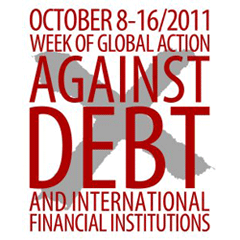 The system of debt continues to devastate the lives of people around the world. People in the South face the daily impacts and consequences of the financial indebtedness of their countries, which far from having been "relieved" is growing in step with the crisis and the pursuit of extraordinary profits by the most concentrated forms of capital. They continue also to bear the burden of the unpaid historical, social, ecological, and climate debts which are increasing as well to the rhythm of false solutions to the global crisis.
 We cannot analyse the global ecological crisis separately from the crisis in which we are immersed or the critique of the economic model that has led us into it.
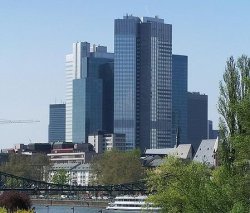 In July - September 2011 the stock markets were again shaken at international level. The crisis has become deeper in the EU, particularly with respect to debts. The CADTM interviewed Eric Toussaint about various facets of this new stage in the crisis.
  A Greek default and exit must be taken in the people’s interests – not entrusting the process to the EU, IMF and banks.
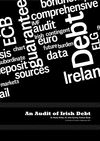 This is an audit of Irish sovereign debt, and as such seeks to quantify and explain the debts, both real and contingent, for which the Irish people have become responsible.
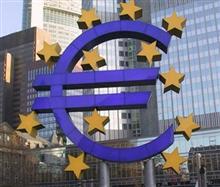 In July-September 2011 the stock markets were again shaken at international level. The crisis has become deeper in the EU, particularly with respect to debts. The CADTM interviewed Eric Toussaint about various facets of this new stage in the crisis.
 In July-September 2011 the stock markets were again shaken at international level. The crisis has become deeper in the EU, particularly with respect to debts. The CADTM interviewed Eric Toussaint about various facets of this new stage in the crisis.
 We live in a world of plenty. Today food is produced for 12